


What is Architectural Lighting Design
Architectural lighting design refers to the integration of lighting into the built environment, where light is planned as part of the architecture rather than added after. When done well, lighting becomes almost invisible — yet it defines how a space is perceived, experienced, and understood.
The Overlooked Foundation
When planning a home, most people begin with layout, materials, and furniture. Lighting is often introduced later, treated as a final layer to complete the space. In architectural lighting design, however, lighting is not an addition. It is a fundamental element that shapes how a space is perceived, experienced, and understood.
Why Lighting Should be Planned before Interior Design
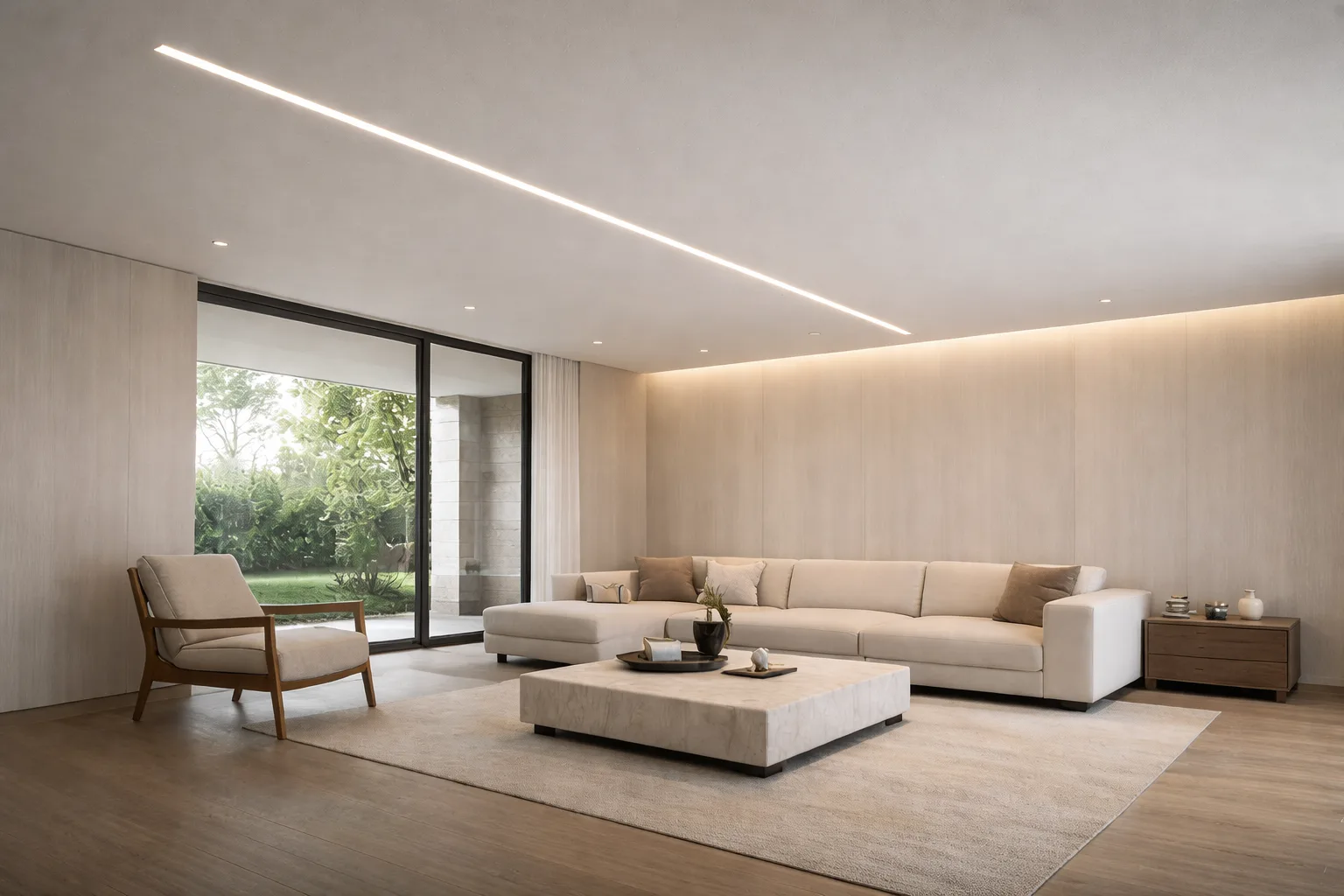
When lighting is considered after the design has been finalised, it is forced to adapt to existing constraints. The result is often subtle, yet impactful. Ceiling compositions become interrupted, alignment is lost, and the visual rhythm of the space begins to break. Even in well-designed interiors, these inconsistencies can affect how cohesive a space feels.
A space may look complete at first glance, but something feels unresolved.
The Problem With Poor Ceiling Lighting Design
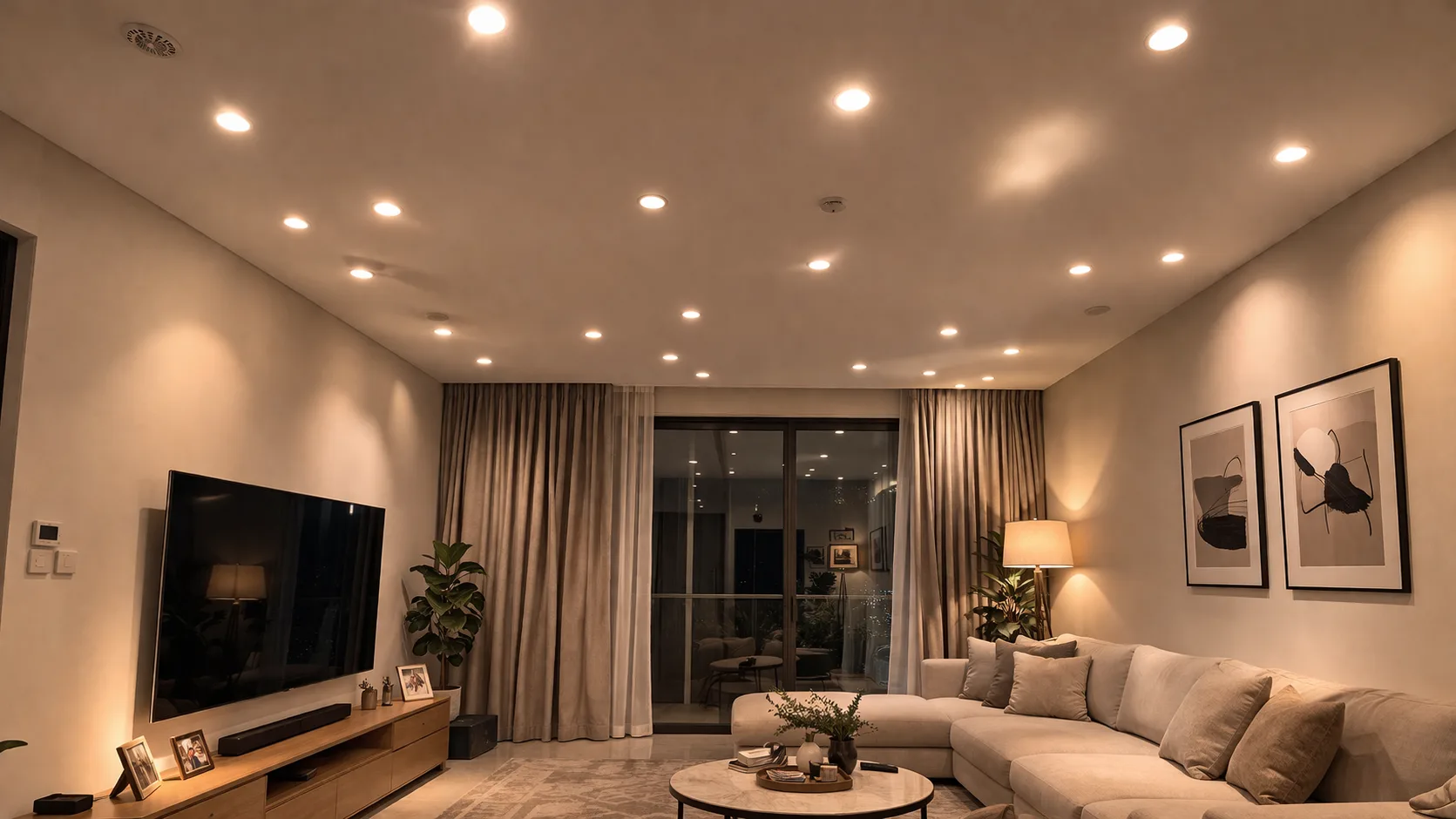
Poor ceiling lighting design is one of the most common issues in residential interiors. Misaligned downlights, excessive fixtures, and inconsistent spacing disrupt the overall composition of a space.
Rather than enhancing the architecture, lighting becomes visual noise.
Architectural Lighting Design in Singapore Homes
In Singapore homes, where ceiling heights and renovation timelines are often constrained, architectural lighting design becomes even more critical.
Early planning allows homeowners to optimise ceiling space, reduce reliance on excessive downlights, and integrate lighting seamlessly into renovation works. This is particularly relevant for HDB flats and condominiums, where coordination early in the process leads to a more refined outcome.
Lighting as Part of Architecture
When architectural lighting design is introduced at the beginning of the design process, it begins to work with the architecture rather than against it. It follows structural lines, enhances proportions, and creates continuity throughout the space.
This is where architectural lighting becomes truly effective. The lighting itself becomes almost invisible, yet its presence is felt in the clarity, balance, and calmness of the environment.
A Shift Toward Integrated Lighting Systems
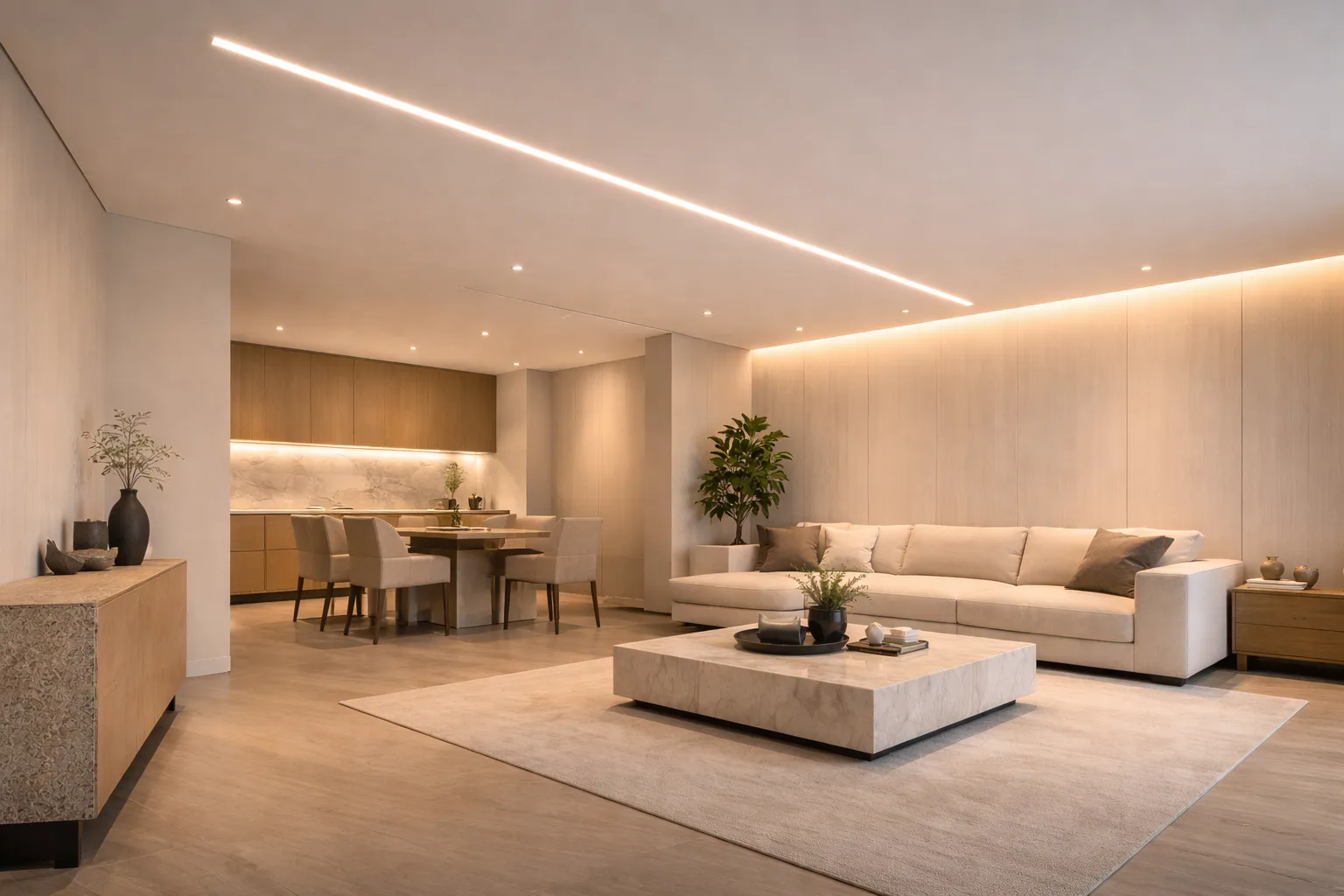
Modern interiors are increasingly defined by simplicity and intention. Clean lines, minimal forms, and balanced compositions require lighting solutions that are equally considered.
An integrated lighting system allow light to become part of the structure, rather than a collection of separate fixtures. The result is a space that feels composed,cohesive and intentional.
Modular Lighting Systems Explained
Within this shift, modular lighting system introduces flexibility and precision. Instead of fixed points, lighting becomes a system that can align with the architecture and adapt to spatial requirements. Chandelle™ Lego is designed around this approach, functioning as a modular lighting system that follows architectural intent rather than working around it.

Start With Light
The difference between a refined space and an average one is rarely obvious at first glance. It reveals itself through alignment, balance, and flow.
Lighting plays a central role in all of these. When it is considered early, it does more than illuminate. It defines the space itself.
How to Plan Architectural Lighitng Design for your Home
Planning your lighting design for homes early allows for better integration and a more cohesive outcome.
Key considerations include:
- Plan lighting before renovation begins
- Align lighting with ceiling and architectural layout
- Work with your electrician early in the process
- Use layered lighting:
- Ambient lighting for general illumination
- Task lighting for functional areas
- Accent lighting to highlight architectural features
- Ambient lighting for general illumination
Lighting is most effective when it is considered early as part of the architecture, not added as a finishing detail.
Planning Your Lighting the Right Way
For homeowners and designers exploring architectural lighting, systems like Chandelle™ Lego offer a more integrated approach, allowing lighting to be considered as part of the design from the very beginning.
If you are currently working on a project, exploring lighting early in the process can significantly improve the final outcome. You may also connect with our team to better understand how architectural lighting design can be thoughtfully integrated into your space.


