


The Default Choice Most Homes Make
For decades, downlights have been the standard in residential lighting. Evenly spaced across ceilings, they provide a familiar and functional solution that many homeowners default to without much consideration.
While this approach works from a purely practical standpoint, it often falls short in homes where design and spatial clarity are equally important.
The Limitation of Downlights
Downlights are inherently point-based. Each fixture operates independently, creating multiple sources of light across the ceiling. When used excessively, this results in a fragmented visual composition.
Over time, the ceiling becomes filled with repeated elements that compete for attention. The lighting may be bright, but the space can feel visually cluttered and unresolved. Instead of supporting the architecture, the lighting begins to disrupt it.
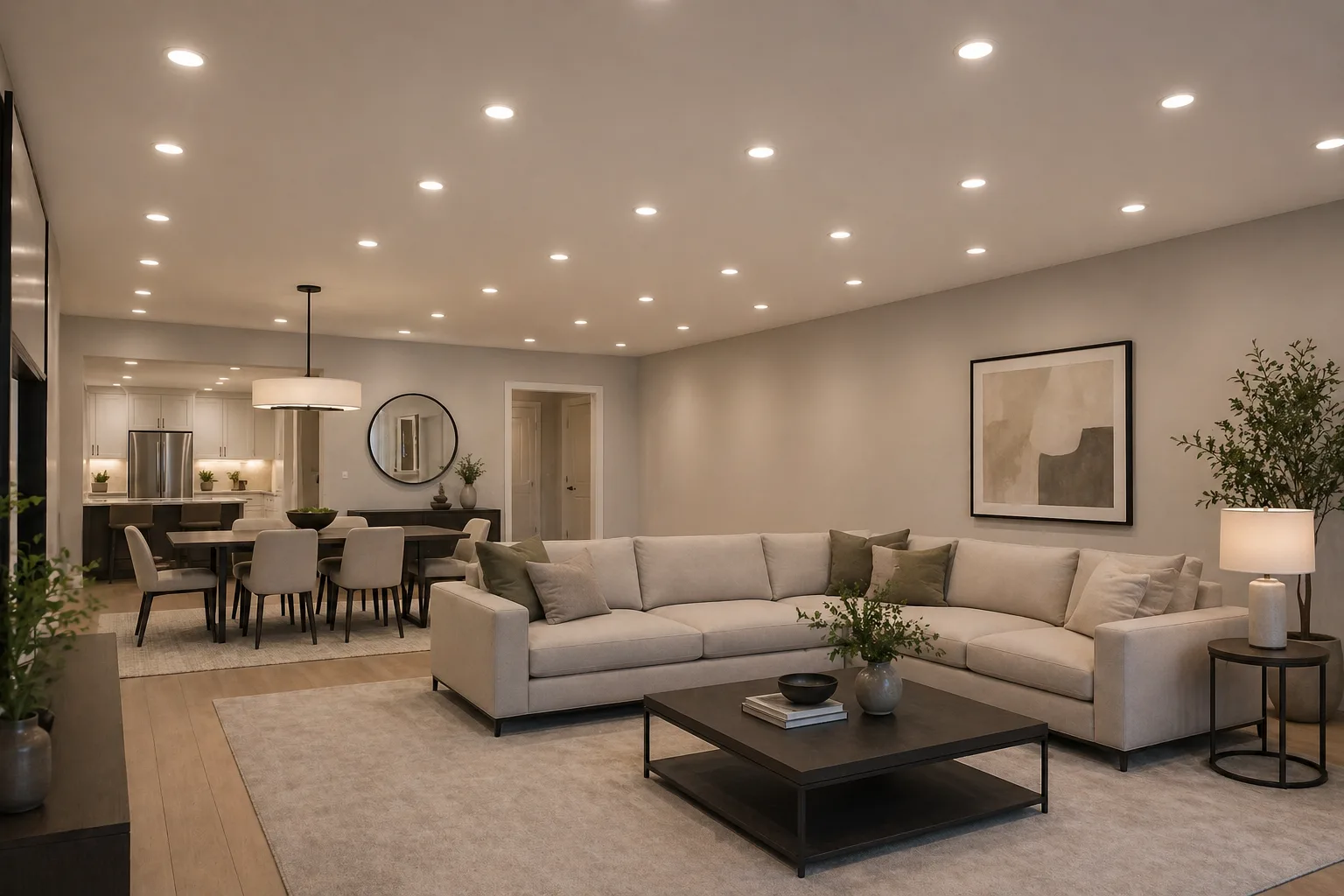
ceiling with multiple recessed downlights in residential space
A Different Approach — Linear Lighting
Linear lighting introduces a more considered way of illuminating a space. Rather than relying on individual points, it creates continuous lines of light that align with the architecture.
This shift transforms lighting from a collection of fixtures into a unified system. The ceiling becomes calmer, more structured, and visually coherent.
How Light Shapes the Space
When lighting follows clean, intentional lines, the perception of space changes. The eye is guided naturally across the room, reinforcing proportions and creating a sense of order.
Light becomes less about visibility and more about experience. It softens transitions, enhances geometry, and supports how the space is meant to be used.
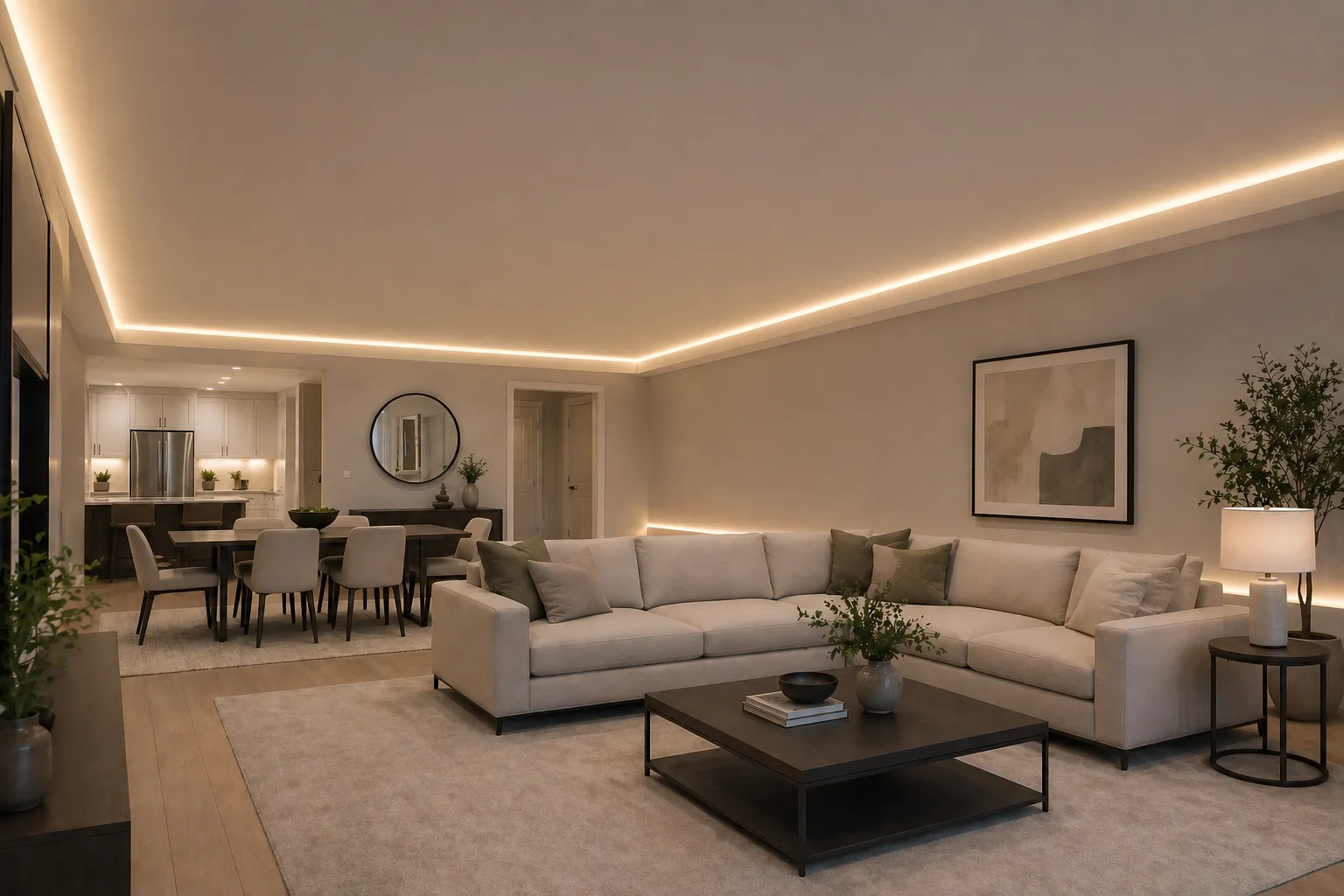
continuous linear lighting integrated into modern ceiling
Function Versus Composition
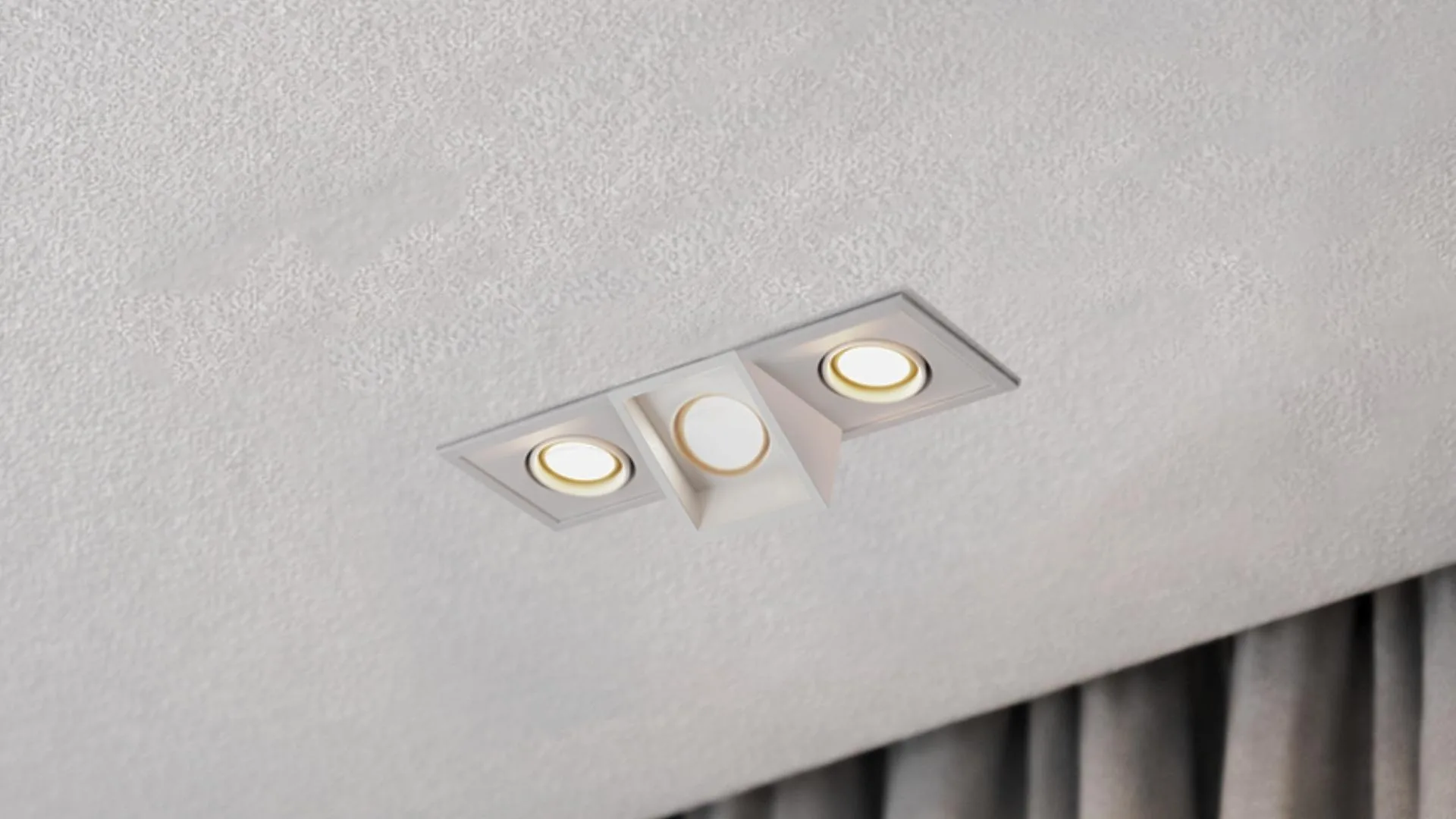
Downlights are not without purpose. They remain effective for focused, task-oriented lighting where precision is required.
However, when used as the primary lighting solution, they often prioritise function over composition. Linear lighting, on the other hand, introduces a balance between both, offering illumination that is not only effective but also visually intentional.
A More Refined Lighting Strategy
The most considered interiors rarely rely on a single type of lighting. Instead, they combine different layers in a way that feels seamless and restrained.
Linear lighting can establish the overall structure of the space, while selective use of downlights provides functional support where needed. Together, they create an environment that feels both practical and composed.
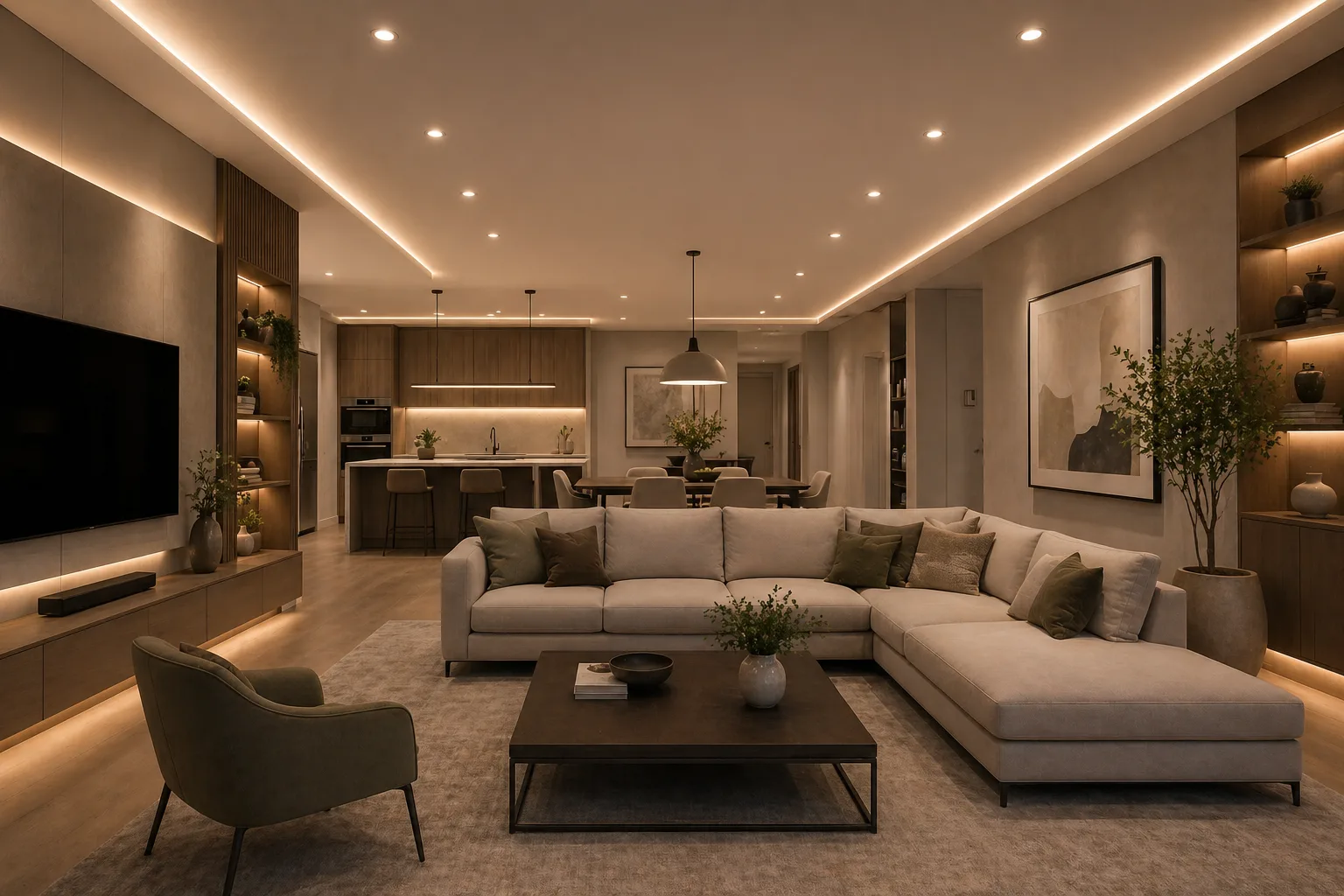
combination of linear lighting and downlights in modern home
Chandelle™ Lego — A Modular Linear Lighting System
Chandelle™ Lego applies this approach through a modular linear system designed for architectural integration. Each component connects seamlessly, allowing lighting to follow the layout of the space with precision.
Rather than being fixed, the system can adapt over time, maintaining consistency even as the space evolves.
Conclusion — Designing Beyond Brightness
Lighting is often approached as a technical requirement, but its impact goes far beyond illumination.
The choice between downlights and linear lighting ultimately reflects how a space is intended to feel. A more thoughtful approach allows lighting to support the architecture, bringing clarity, balance, and a sense of refinement to everyday living.


